A long conversation with Suezo
From a small studio in Presidente Prudente: on dotwork grids, freehand symmetry on skin, and building a geometric tattoo scene in the countryside of São Paulo.
"I believe I played a role in introducing geometric tattooing to my city."
Q.01How did you get your name, and when did you find your style?
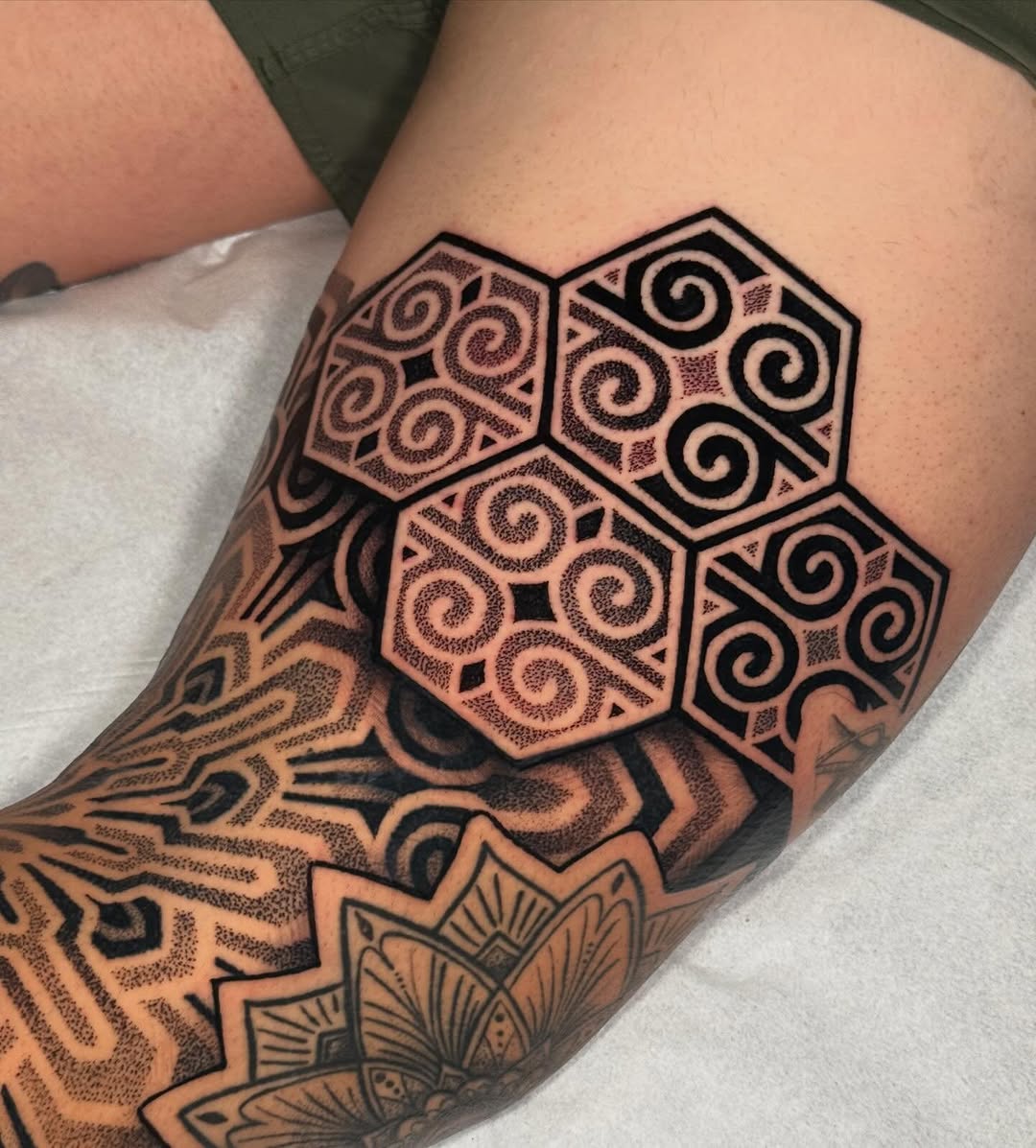
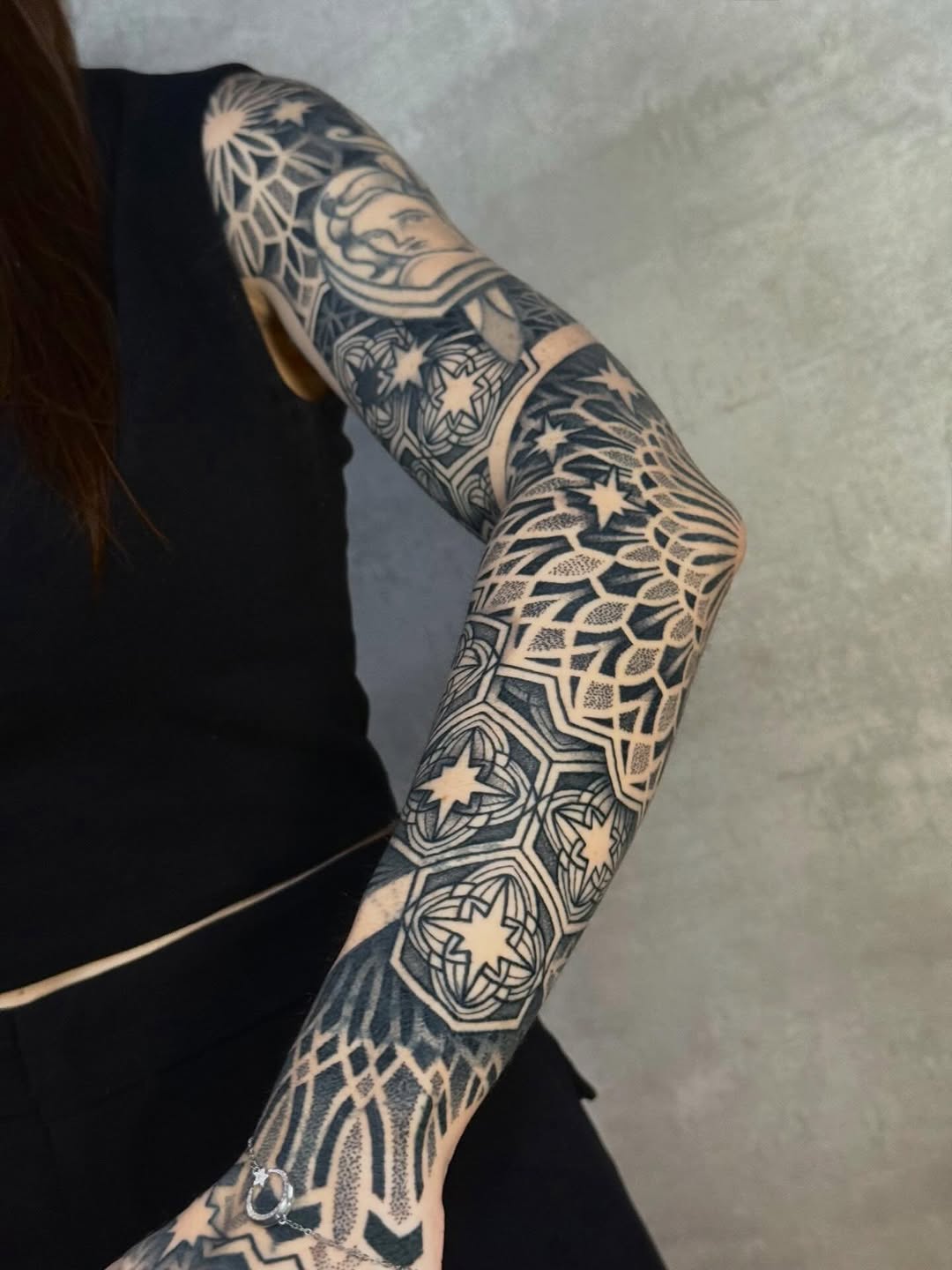
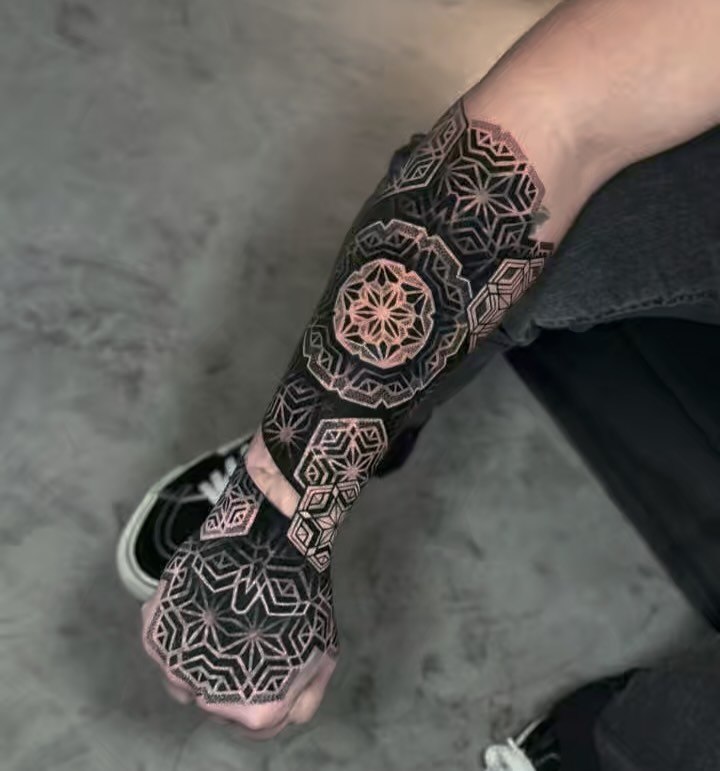
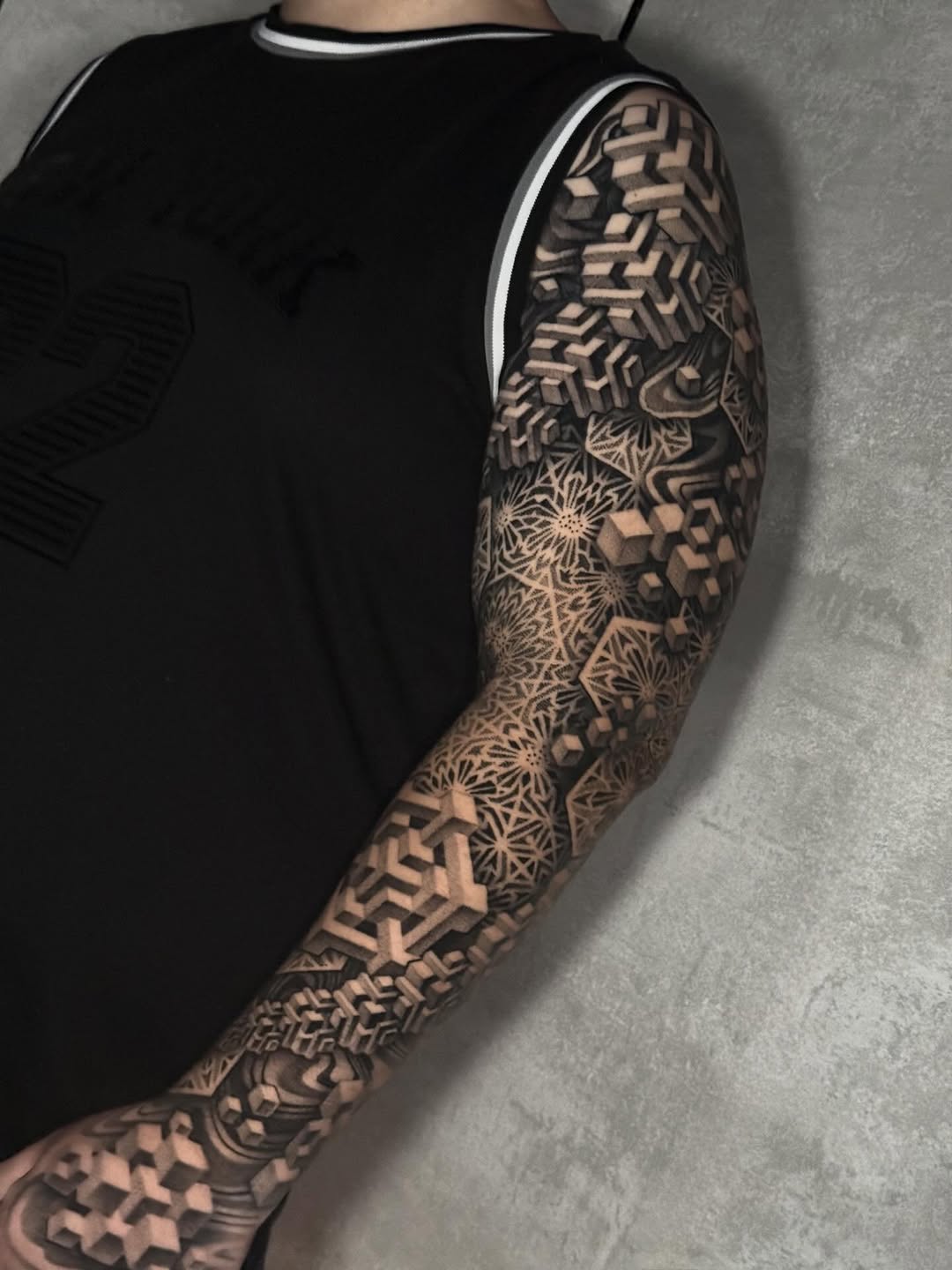
My real name is Felippe. Suezo is a nickname given to me by a cousin about 20 years ago, inspired by a cartoon character. I've been tattooing professionally since 2010. In the beginning, what drew me to tattooing was the new school style. However, around 2014, I saw a piece by tattoo artist Marco Galdo that really caught my attention. I was impressed by the idea of someone creating geometric forms using dots, and shortly after, I began building grid after grid to create my own geometric designs.
Q.02Tell us about your local tattoo scene and how you got started there.
I live in a countryside city in the state of São Paulo, about six hours away from the capital. At the beginning of my journey, it wasn't easy — there were very few tattoo artists working in the area, and they weren't very welcoming. Still, my determination was stronger. I believe I played a role in introducing geometric tattooing to my city. Today, with the growth of social media, geometry has been gaining more space, with many works circulating in the region and clients showing increasing interest.
Q.03How do you achieve symmetry in your designs?
To keep each design as symmetrical as possible, I start all my projects by drawing directly on my clients' skin. This allows me to respect the anatomy and individuality of each body, creating harmonious, visually pleasing, and unique designs.
There were very few tattoo artists working in the area, and they weren't very welcoming. Still, my determination was stronger.
Q.04Walk us through your design process from concept to tattoo.
I begin my projects with a freehand drawing to better study my client's anatomy. Then, I transfer those measurements using contact paper, and only after that do I use software to develop the design. After adjustments and approval, on the day of the tattoo, I redo the entire process freehand, carefully placing the stencils in their proper positions.
Q.05What inspires your geometric work?
I believe my work is a blend. I love sacred geometry, but I don't limit myself entirely to it. I pay attention to all kinds of geometric forms in everyday life — from shopping mall floors to church stained glass — always seeking new inspiration.
Q.06How does your cultural background influence your work?
Brazil has a rich cultural diversity and many great artists, and I believe I draw influences from a variety of situations. At the moment, I don't have specific references in my work, but it's something I still want to explore and develop further.
From the archive
Q.07How do you balance creative freedom with client preferences?
I usually have a lot of creative freedom when developing my projects, but I always try to understand each client's preferences — what type of geometry suits their style and what kind of composition they prefer, whether more complex or more minimal. In the end, it becomes a collaborative process.
Q.08Studio work or conventions — what do you prefer and why?
Today, I definitely prefer working in my private studio. I've participated in many conventions, and I still enjoy the energy of those events, but for long tattoo sessions, I prefer a calm environment without major distractions. Awards have never been my main motivation for attending these events. I enjoy being in that atmosphere, doing what I love alongside people who share the same passion, and having the opportunity to meet and exchange ideas and experiences with artists I admire.
Body and mind in balance — a process shared with the client.
Exercise is part of his routine, and a lighter diet on session days; eating during breaks instead of relying on coffee. It's a mindset he shares with his clients — eat well, drink plenty of water, keep the area moisturized starting at least a week before the session.
"We're in this process together," he says. The long sitting belongs to both of them.
Q.09How do you take care of yourself during long sessions?
I believe it's important to keep body and mind in balance. Exercising has become part of my routine, and I try to maintain a lighter diet, especially during tattoo sessions. I like to eat something during breaks to keep my energy up — I no longer rely only on coffee. I also share this mindset with my clients, since we're in this process together. I ask them to eat well, drink plenty of water, and keep the area moisturized starting at least a week before the session.
Q.10What's next for you — future projects or ideas you're developing?
Yes, definitely. I have some ideas and projects saved, and I like to make quick sketches that I can develop at the right moment. Especially today, with the help of software, the possibilities are endless.
Q.11What do you think about the OMF Geometry community?
I think the OMF Geometry community is very important. It connects geometric artists from all over the world. I'm already in touch with several of them, and I'm really looking forward to meeting them in person soon.
Recorded Summer 2026 · Presidente Prudente